
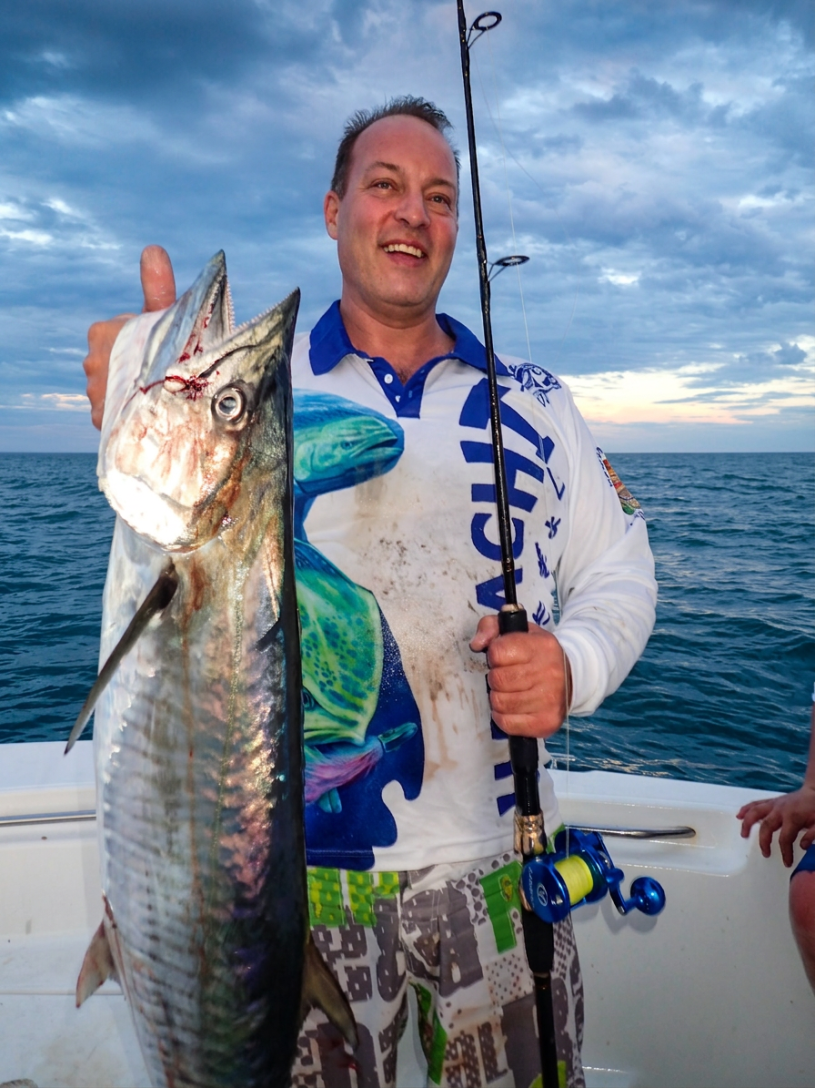
Shore & Boat | Global Destinations | S. commerson & S. cavalla | Balloon & Drone | Hamachi vs Ripple Fisher vs Zenaq vs Major Craft
Some fish are hard to catch. Some fish are hard to hold on to. And then there is the narrow-barred Spanish or Atlantic King mackerel — locally known as the “Spano” in Australia, “Kanaad” in the Gulf states, “Kingfish” or “King Mackerel” in the US and “Couta” in South Africa — a fish that is deceptively easy to find and absolutely savage when it decides your lure is lunch. If you have never watched a meter-plus Spanish mackerel accelerate from twenty metres of water and vaporise a trolled garfish rig in the blink of an eye, well, you have not yet been properly introduced. And the worst part? That first bite is never the last. This fish gets under your skin in a way that is genuinely hard to explain to non-anglers.
Scomberomorus commerson. The narrow-barred Spanish mackerel. Scomberomorus cavalla. The Atlantic king mackerel. A torpedo of iridescent silver and bronze, built by evolution to be the apex sprinting predator of tropical and sub-tropical seas. They average 12 to 15 kilos in most of the places you’ll fish for them, reach 60 kilos in the trophy brackets, and fight with a frantic, head-shaking ferocity that makes every hookup feel like you’ve snagged a passing jet ski. They are speed personified. They are also one of the finest fish on the table on the planet, which means the motivation to find them — and find them properly — runs exceptionally deep.
This article covers the lot. Where to find them globally, when to be standing on the deck or the rocks, every serious technique from balloon fishing to drone deployment to high-speed trolling and metal jigging, and the definitive breakdown of which rods to use — specifically Hamachi’s best options — stacked up against Ripple Fisher, Zenaq, and Major Craft. We also cover the Atlantic king mackerel — Scomberomorus cavalla — a different species entirely but one that deserves its proper place alongside its Indo-Pacific cousin. Let’s go.
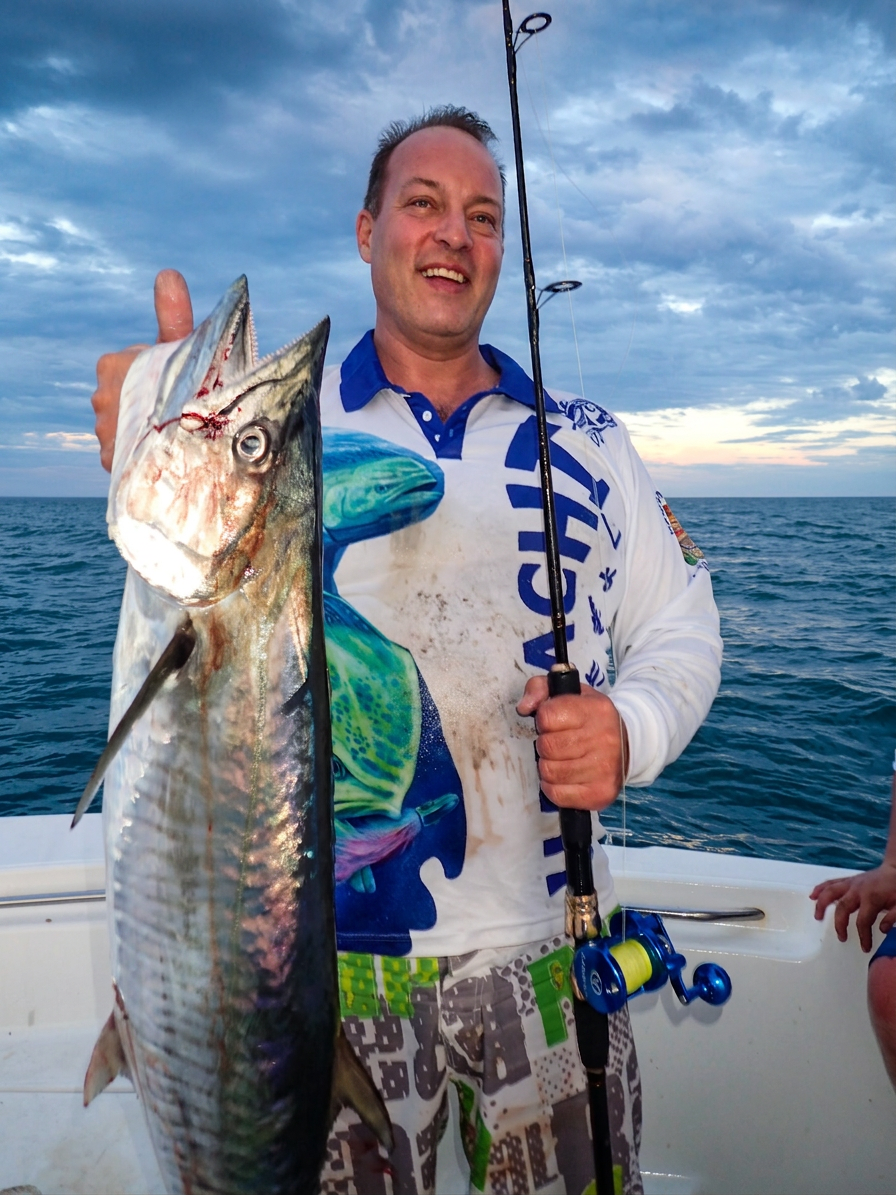
Where in the World Do You Find Them?
The Spanish mackerel’s range is vast and largely Indo-West Pacific, which covers a staggering amount of productive fishing ground. From the top end of Australia across to the Persian Gulf, down through the Indian subcontinent, east to Southeast Asia, and around to South Africa — this is one of those genuinely global species where the question is less “where can I find them?” and more “which version of this trip do I want to take?” Each destination has its own flavour, its own seasonal window, and its own quirks of technique. Here is the rundown.
Queensland — The Promised Land
Ask any serious mackerel angler where the best fishing on earth is and there’s a good chance the answer involves Queensland. The combination of the Great Barrier Reef, the Coral Sea, warm tropical water, and enormous concentrations of bait makes Queensland’s mackerel grounds genuinely world-class. The Whitsundays and Hamilton Island sit at the glamorous end of the spectrum — deep-water channels, current lines, and reef edges that channel mackerel runs with extraordinary predictability. Further north, the Torres Strait is another tier entirely. Fish up there don’t read size limits and the sheer density of mackerel schools in a good Torres Strait season is something you have to witness to believe.
Mid-coast Queensland offers its own riches. Hervey Bay, the Bustard Head area near 1770, and the offshore reefs of the Capricorn Bunker Group all hold serious fish throughout the season. Closer to shore, the jetties, headlands, and rocky points around Yeppoon, the Keppel Islands, and offshore from Gladstone all produce excellent land-based and light-tackle boat fishing when the schools push inshore following bait. These aren’t trophy-sized fish necessarily, but they fight hard and there are times when they are stacked so thick under the surface that you could walk across their backs.
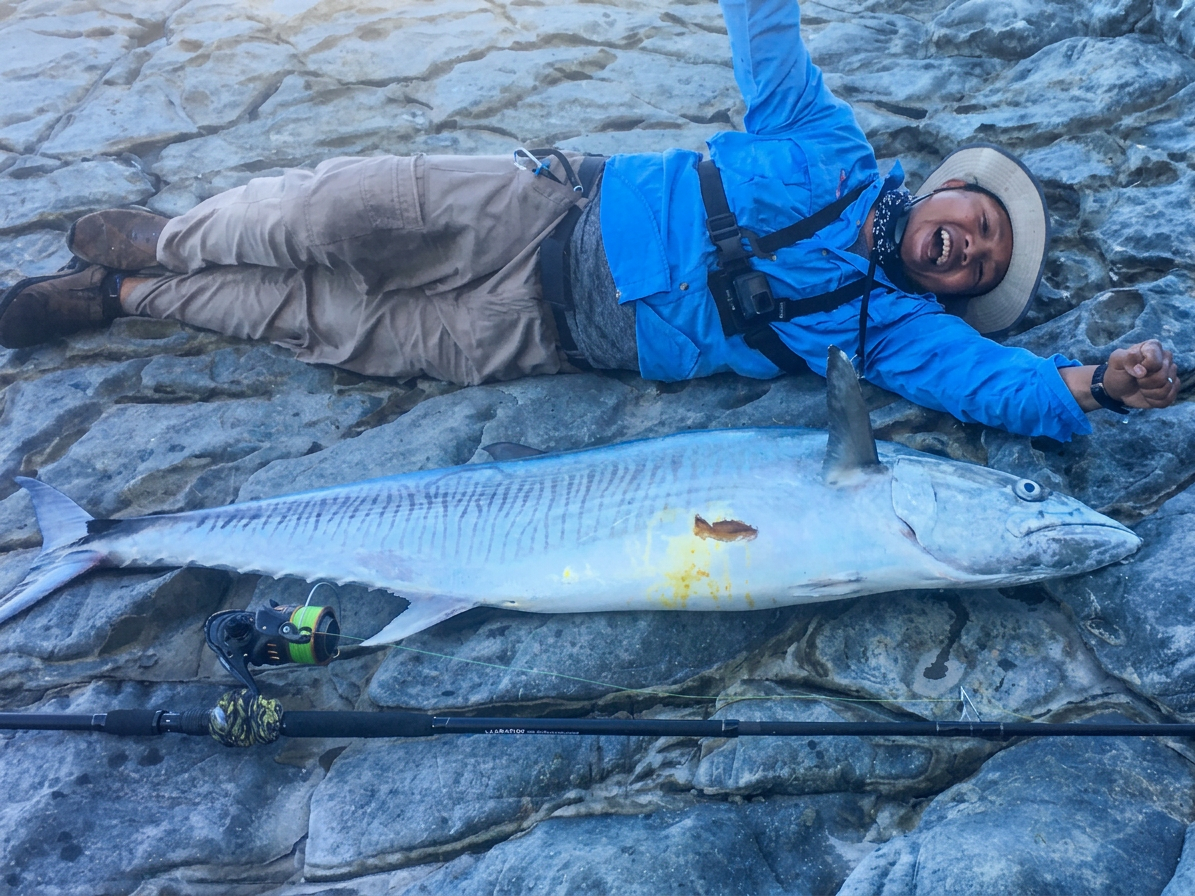
Solid Spaniard taken from the rocks on a Hamachi XOS GTnDoggie 8’2 rod
Western Australia — Cliffs, Reef and Serious Fish
Western Australia’s mackerel fishing is a different beast. This is where the land-based game truly comes into its own, and where the combination of remote cliff-top fishing, drone and balloon tactics, and the sheer physical drama of the Pilbara and Gascoyne coastlines makes for fishing experiences unlike anything else in the country. Quobba Station north of Carnarvon, the Steep Point area, and the coastal cliffs between Coral Bay and Exmouth are widely regarded as some of the finest land-based Spanish mackerel country in the world.
Further north, the Dampier Archipelago, the Mackerel Islands (named for entirely obvious reasons), and the waters around Onslow produce consistent boat fishing with good average sizes and regular trophy-class fish pushing well into the 20-kilo-plus bracket. The Ningaloo Reef system around Exmouth is underrated as a mackerel destination and offers the bonus of one of the most extraordinary marine environments on the planet to fish from.
Northern Territory — Under the Radar Gold
The NT doesn’t get the column inches it deserves for mackerel fishing, but anglers who have fished the waters around Darwin, the Tiwi Islands, and out to Groote Eylandt know exactly what’s on offer. The dry season from May through to October is the window here, when the monsoon rains stop, the water clears, and the tidal systems around the reef edges and offshore shoals come alive with Spanish mackerel, queenfish, GT, and tuna in combinations that have caused grown adults to quietly sob on the boat trip home. The NT is remote, the logistics require some planning, and that is precisely what keeps it fishing the way it does.
Oman and the UAE — The Gulf’s Silver Bullet
If you’ve never considered a fishing trip to the Arabian Peninsula then you need to recalibrate your thinking immediately. What locals in the UAE call “Kanaad” or “Chana’ad” is our old friend Scomberomorus commerson — the exact same fish — and it is fished with ferocious enthusiasm across Oman, the UAE, Qatar, and Bahrain. The difference here is that the fish grow to extraordinary sizes in the nutrient-rich Gulf of Oman upwelling systems, and the fishing infrastructure — particularly around Muscat, Dibba on the east coast, and the Salalah area in southern Oman — is now genuinely world-class.
Dibba is a particular standout. The Gulf of Oman funnels cold, bait-rich water through the Musandam peninsula and the results speak for themselves: kingfish (as the mackerel is known locally), yellowfin tuna, GT, sailfish, and amberjack all sharing the same grounds. Shore-based jigging and boat-based trolling both produce consistently from October through to May, and the average size of Omani mackerel will make you rethink your drag settings.
India and Sri Lanka — The Subcontinent’s Best Kept Secret
The Spanish mackerel is a staple species throughout the waters of peninsular India and Sri Lanka, with the Palk Strait between the two countries, the waters off the Kerala coast, and the offshore grounds around the Lakshadweep Islands all producing fish in serious numbers. Indian Ocean mackerel fishing tends toward the April-to-July window in the Palk Strait and July-to-January off Madras, though local conditions vary considerably. The sport fishing infrastructure here is less developed than Australia or Oman, which for the adventurous angler is simply another way of saying “largely unfished” — and some of those fish are enormous.
South Africa — The Couta Coast
South Africans call them “couta” and they are absolutely passionate about them. The KwaZulu-Natal coast from Durban north to the Mozambique border, and the waters around Sodwana Bay and Aliwal Shoal, are Spanish mackerel heartland. These fish run alongside sailfish, marlin, and GTs through the Agulhas current system and the boat fishing from October through to April is genuinely world-class. Shore-based couta fishing from rocky headlands in KZN is also a serious pursuit with a dedicated following of anglers who treat their cliff-top marks with the same secrecy a New Zealander reserves for a kingfish ledge.
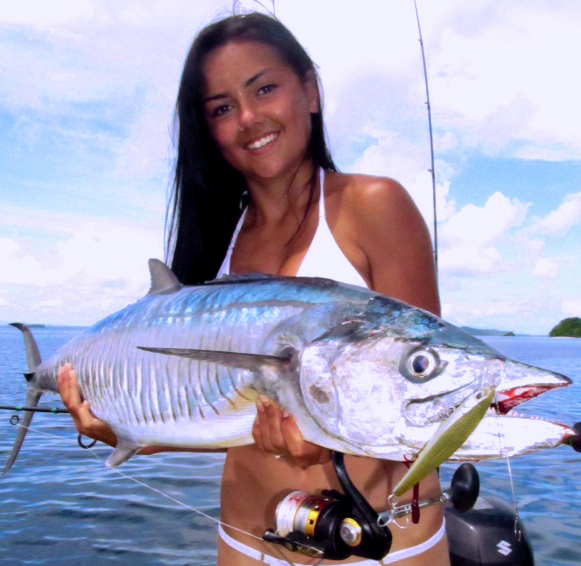
A Tale of Two Kings — Meet Scomberomorus cavalla
Right, here’s where it gets interesting for the angler who likes their taxonomy straight. Everything covered above — the Spanos of Queensland, the Kanaad of Oman, the Couta of KZN — is Scomberomorus commerson, the narrow-barred Spanish mackerel. But there is a second king in this family that deserves its own proper introduction, and that is Scomberomorus cavalla — the Atlantic king mackerel, known simply as “kingfish” across the American South and the Caribbean, and not to be confused with its Indo-Pacific cousin despite sharing the common name “king mackerel” in many markets. Same family, very different fish, genuinely different fishery. Here is what you need to know.
Scomberomorus cavalla is a Western Atlantic species, ranging from the waters off Massachusetts all the way south to Brazil, through the Gulf of Mexico and across the Caribbean Sea. It is the apex mackerel of that entire region and is hunted with a ferocity and seriousness of purpose that matches anything you’ll find in the Indo-Pacific game. The lateral line that dips sharply just below the second dorsal fin is the field-identification key that separates it from the Atlantic Spanish mackerel (S. maculatus), which is smaller and spot-marked. Cavalla is clean, silver, and fast — typically 5 to 14 kilos in most fisheries, with trophy-class fish pushing well past 20 kilos and a world record that sits above 42 kilos. That is a serious animal on any tackle.
Where the Atlantic King Lives
The epicentres of the cavalla fishery are the Gulf of Mexico coast from Texas through to the Florida Panhandle, the South Atlantic Bight from Florida up through the Carolinas and into Virginia, and the Caribbean — particularly around Puerto Rico, the US Virgin Islands, and the offshore grounds of Central America’s Caribbean coast. Florida deserves special mention as the year-round hub: the waters off Miami, the Florida Keys, and the offshore edge of the Gulf Stream running up the east coast all hold king mackerel with a consistency that no other state can match. North Carolina — specifically the waters off Cape Hatteras and the Outer Banks — produces some of the largest average-sized fish on the entire Atlantic coast when the summer migration arrives, and the dedicated tournament scene there is fierce.
In the Gulf, Venice, Louisiana and the offshore rigs and platforms of the northern Gulf produce outstanding fishing when the water warms. The rigs act as artificial reef systems and the king mackerel concentrate around them with a predictability that makes them one of the most consistent targets in US saltwater fishing. Anglers fishing the “oil patch” offshore from Venice and out of Port Aransas in Texas know this fishery intimately, and the average size of Gulf kings running the rig country is a genuine step up from inshore fish.
How Cavalla Fishes Differently to Commerson
This is the practical question for anyone who has done their mackerel fishing in the Indo-Pacific and is heading to the US East Coast or Caribbean for the first time. Scomberomorus cavalla is a live-bait fish first and a lure fish second — the reverse of how most Australians approach their Spanos. The dominant technique in the US Atlantic and Gulf fishery is slow-trolling live baits — typically live blue runners (Caranx crysos), large pilchards, or menhaden — behind the boat at 1.5 to 3 knots with a stinger rig: a front treble through the nose and a trailer treble hook attached to the rear to catch the fish’s trademark short-strike slashes. It is a devastatingly effective system and the reason the stinger rig became a cultural institution in the US king mackerel scene. The wire trace of 60 to 90lb single-strand remains essential for the same reason as with commerson — the canine teeth are serrated razors and you will not get two chances to learn that lesson.
High-speed trolling is absolutely a part of the cavalla game as well — spoons, skirted lures, and large bibbed minnows at 5 to 8 knots will all produce fish, particularly when you’re searching and haven’t located a specific school. But in the tournament scene and among the most dedicated king mackerel anglers in the Southeast US, the live-bait slow-troll is the technique that separates the top boats from the also-rans. Jigging also produces well when fish are located on the sounder at specific depths, particularly around the offshore rigs in the Gulf where vertical presentations to a stationary school are practical.
Hamachi Nano Xylimum Xtreme PE2–5 or PE3-8 — Again the Boat All-Rounder
The same rod that earns its place on an Australian mackerel boat earns it here too, and for identical reasons. The Nano Xylimum Xtreme’s full parabolic action is genuinely ideal for slow-trolled live baits — the through-blank flex cushions the strike of a king mackerel hitting a lively bait at speed, reducing the shock-load that breaks off fish on stiffer trolling blanks, while the blank still loads through the butt for the sustained pressure needed to turn a big cavalla away from a rig structure or a current edge. In spinning configuration matched with a 6000 to 8000-class reel, or overhead with an 8-16-class lever-drag running 40lb braid, this is the most complete cavalla live-bait tool available at its price point. The fact that it doubles as a vertical jigging rod for working the rigs in the Gulf is a bonus that justifies the single-rod philosophy for the travelling angler. Around $400 USD.
One final distinction worth making: cavalla is a genuinely excellent eating fish — the white, firm flesh is milder than many tropical mackerel species and it smokes exceptionally well, which is why the US tournament scene places such emphasis on it as both a sport and table fish. Larger fish (over 10 kilos) carry an increased mercury loading from their position at the top of the food chain, which is worth bearing in mind for regular consumption, particularly for pregnant women and children. Eat it in moderation and enjoy every bite. It has earned its place on the table just as thoroughly as it has earned your respect on the end of a line.
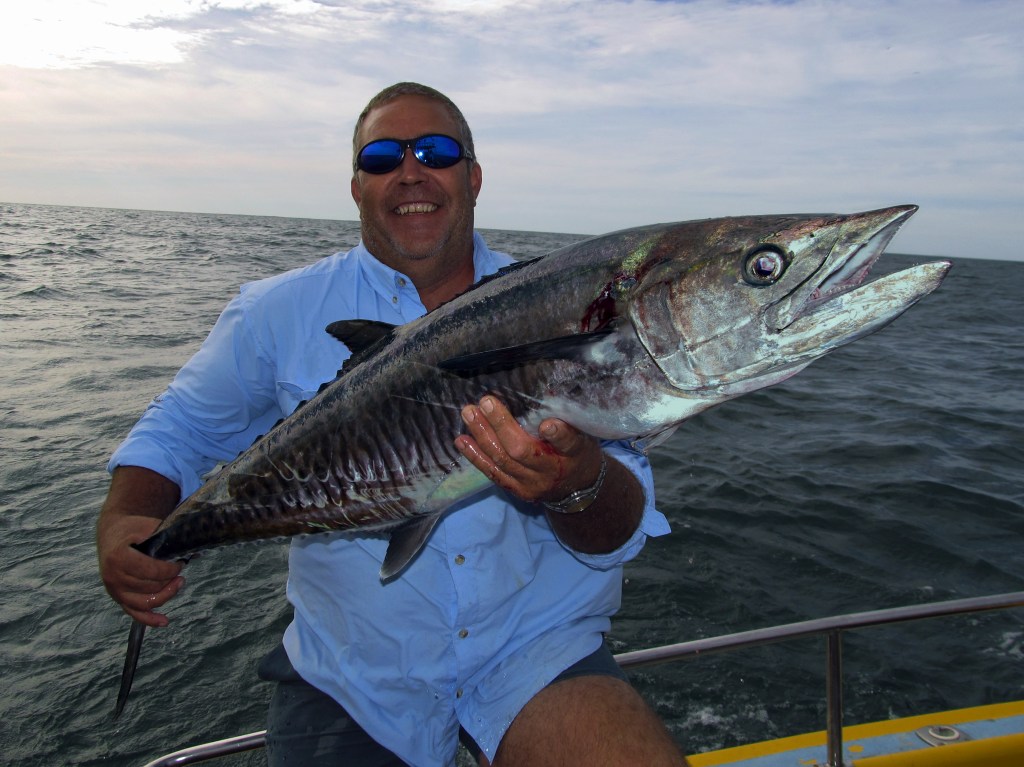
Shore-Based Mackerel Fishing — Rocks, Drones, and Balloons
This is where things get interesting. Spanish mackerel are one of the relatively few genuine trophy-grade pelagic fish that are regularly accessible from shore, and the techniques used to reach them from land have evolved into a seriously creative field over the past decade. Balloon fishing and drone fishing in particular have transformed what’s achievable from rocky headlands and cliff-tops around Australia’s north and west coasts. Let’s break each method down.
Balloon Fishing
Balloon fishing for mackerel is a technique born of necessity — the fish are often holding 100 to 200 metres from shore in water you simply can’t reach with a conventional cast, but that doesn’t mean you can’t fish it. The principle is elegantly simple: a helium-inflated balloon is attached to your mainline via a release clip, with your trace and bait hanging beneath it. The balloon then drifts downwind and down-current, carrying your bait out into water that was previously inaccessible from the cliff or headland. Offshore wind is a must.
The art is in reading the wind and current. You want the balloon to carry your bait along a current edge, past a reef structure, or out to a colour change — somewhere the mackerel are already hunting. Fish that balloon properly and the takes are visual, violent, and deeply satisfying. The balloon disappears, the release clip fires, and you are immediately fighting a pelagic fish in open water from land. There are very few fishing experiences that match it for pure adrenalin.
Drone Fishing
Drone fishing has taken the land-based game fishing scene and absolutely detonated it. What was previously the exclusive domain of boat anglers or balloon anglers when the wind was right — putting a livebait or dead bait out over deep reef structure, running a lure across a current break 200 metres offshore — is now achievable from the right headland with a capable fishing drone and a payload release system. In Western Australia in particular, cliff-top drone fishing for Spanish mackerel has become enormously popular, and the results speak for themselves.
Important note: drone fishing regulations vary by state and territory. In Queensland in particular, restrictions apply in National Park and marine park zones, so do your homework before you head out with the hex-rotor. In WA, the practice is widely accepted outside restricted airspace but common courtesy toward other anglers on the same cliff goes a long way.
Shore Jigging — When the Fish Are There
When Spanish mackerel push tight to shore — which they do with regularity around WA’s rocky headlands and Queensland’s reef edges — shore jigging becomes one of the most effective and exciting methods available. A 50 to 80 gram knife jig or metal slug cast on a 9 to 10 foot PE2–4 shore jigging rod and retrieved at maximum speed through a mackerel school will produce blistering strikes. The retrieve needs to be fast — genuinely fast, faster than you think your arms can manage. These fish are accustomed to chasing prey that is genuinely trying to escape and a slow retrieve produces follows but rarely commitments. Make it run for its life and they can’t help themselves.
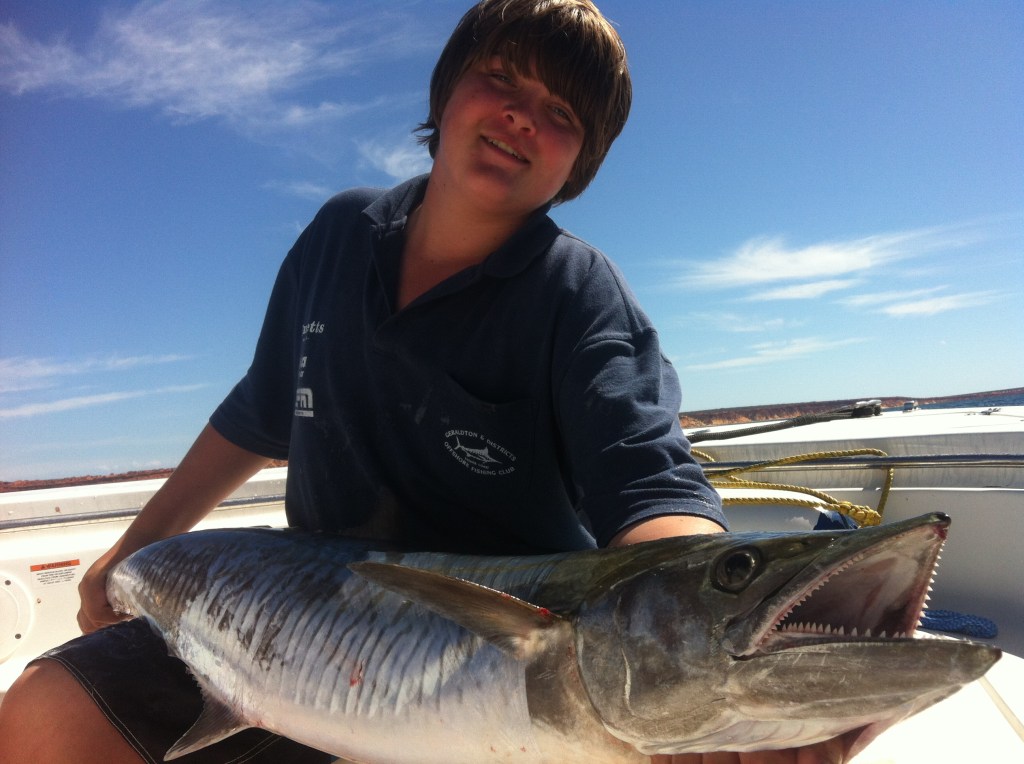
Boat-Based Mackerel Fishing — Trolling and Jigging
Trolling — The Foundation Method
Trolling remains the most consistently productive method for locating and catching Spanish mackerel from a boat, and it is genuinely difficult to beat as a searching technique when you’re covering ground over reef systems and current edges. The standard approach is to run lures and baits at 6 to 9 knots over known structure, current lines, and colour changes in 12-40m water, with 17m depth being a sweet spot. The speed is important — mackerel are not grouper, they are sprint hunters, and a slow troll produces half the strike rate of a fast one. When fish are busting on surface bait, you can drop to 4 to 5 knots with surface swimmers or bibbed minnows and the fishing can be absolutely exceptional.
Jigging — When the Screen Lights Up
When the sounder shows a school of mackerel holding at a defined depth over structure, jigging is often more productive than trolling — and more fun. A 50 to 100 gram metal slug fished on PE2 to PE3 braid, dropped to the school and retrieved at high speed with an erratic jerk-and-wind action, is an absolute mackerel killer. The key is getting your jig into the school quickly and retrieving through the zone fast enough to trigger the chase response. Vertical jigging on the drift over a balled school is particularly effective when you’ve found fish holding in 30 to 80 metres over pinnacles or current lines. Unlike yellowtail kingfish where a slow-pitch flutter works magic, mackerel want speed and aggression — match the energy of your retrieve to the energy of the fish.
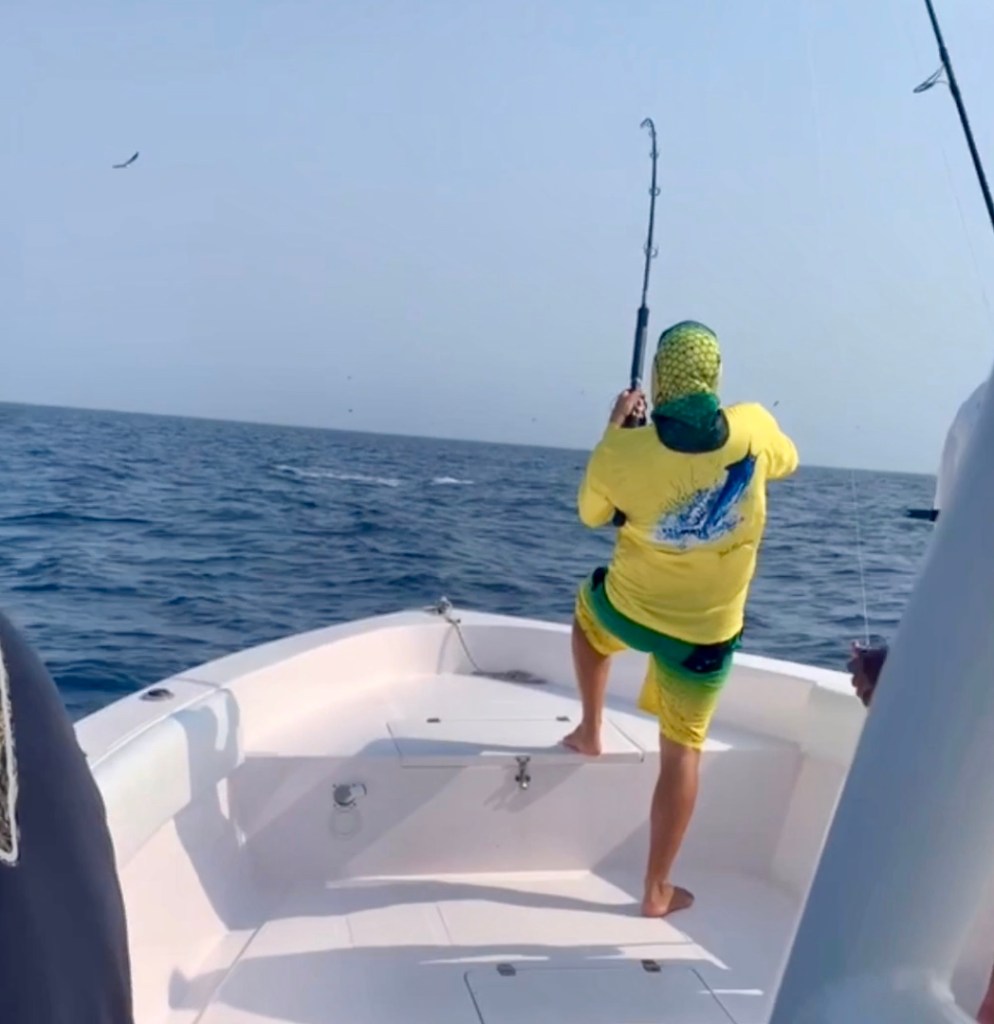
The Tackle: Hamachi’s Mackerel Arsenal
Right. Let’s talk rods, and specifically where Hamachi’s lineup sits in the context of Spanish mackerel fishing across the range of techniques we’ve covered. The good news is that the Hamachi range covers virtually every application — from shore jigging to boat trolling to drone-assisted land-based game — with rods specifically engineered for the job rather than the generalist-compromise tools that much of the market still peddles.
Hamachi Nano Xylimum Xtreme — PE2–5 and PE3-8 (5’6” and 6’0” Spin or Overhead)
This is the rod that does the most useful work across the broadest range of mackerel scenarios. Built on the latest nano-carbon blank technology, the Nano Xylimum Xtreme series are full parabolic rods designed for traditional jigging but engineered to handle live baiting, stray-lining, trolling, and bottom fishing with equal competence. The PE2–5 & PE3-8 ratings puts it squarely in the sweet spot for Spanish mackerel — light enough to feel the speed of a hot fish in the 10–20 kilo class, heavy enough to muscle something genuinely serious. Available in both conventional overhead and spinning configurations. 2026 models come with a lifetime warranty and feel notably crisper than previous generations. Around the $400 -450 USD mark, depending on configuration.
Hamachi XOS GT’n’Doggie PE2–4 PE5-10 (7’6” 3-piece Spinning) PE5-13 (9’6 5-piece spinning)
For the land-based angler — whether you’re working a balloon rig from a WA headland, shore jigging & spinning from a Queensland reef rock, or running a drone bait off a Steep Point cliff — the 7’6” XOS GT’n’Doggie in PE2–4 spinning configuration is the most complete shore-based mackerel rod in the range. The three-piece travel format means it packs into a tube under a metre long, which is non-trivial when you’re hiking 45 minutes to a cliff-top mark with a 20-litre pack and a drone case already killing your shoulders. The nano-composite blank loads beautifully for the distance casting that spinning often requires, and the butt section has more than enough grunt to absorb a mackerel’s initial run before the terrain becomes an issue. This rod also a legitimate light- medium stickbait and popper tool when the mackerel start crashing surface bait. The PE5-13 5-piece 9’6 loaded with 50lb braid is the ultimate weapon when long distance casting of poppers, stickbaits, minnows, metals and baits in the 60 to 220g range to big fish is the go. Around $900–$1,100 USD for the expedition series, around $1500 USD for the PE5-13 9’6 5-piece Xtreme Traveller
Hamachi XOS GT’n’Doggie PE3–8 Overhead (5’6”)
When you’re trolling for big mackerel in the Torres Strait or running baits over deep reef in Oman and the fish sizing up to 40 kilos are a genuine prospect, you want something heavier in the rod holders. The PE3–8 overhead format gives you the muscle to handle a freight-train mackerel on a long-line troll at 8 knots without the rod going to jelly on the first run. This is overkill for average-sized fish but it is exactly the right tool when the size of the fishery demands it. Pairs beautifully with a 8-16 class lever-drag overhead jig reel. The compact 5’6” length keeps it practical in a crowded cockpit. Around $1,100USD.
“The Hamachi Nano Xylimum’s full parabolic action does something unique for mackerel fishing: it cushions the initial shock of a strike-and-run that would catastrophically load a stiffer blank, while still having the backbone to stop a run when you need to.”
The Competition: Ripple Fisher, Zenaq, and Major Craft
Now let’s be honest about the alternatives: there are good options out there, but unfortunately, none of them is willing to stand behind their product like Hamachi with a lifetime warranty. Here’s how the major Japanese brands sit against Hamachi for a dedicated mackerel angler.
The Hamachi XOS GTnDoggie XTR (Xtreme Traveller) 9’6 PE5-13 5-piece has no serious contender, and it’s the only choice if you’re fishing shore based were your by catch maybe a giant trevally, cubera snapper or dogtooth tuna, so we will focus on the light tackle options
Ripple Fisher Aquila
This one is worth talking about first because Ripple Fisher specifically developed the Aquila series with Spanish mackerel and bonito in mind — so this is not a generic comparison, this rod was literally built for our target species. Available in configurations from PE1.5 to PE4, the Aquila is a light spinning tool with a tip-and-butt action, whilst not in the same league as a Hamachi XOS GTnDoggie Ultra Cast. For the boat-based angler casting metals or lightly weighted stickbaits to feeding mackerel schools in 1 to 2 metre seas, the Aquila has solid feel and lure control. The MLT 82-2/4 model (8’2”, PE2 tip/PE4 butt) is a standout — light enough to cast all day without arm fatigue, powerful enough to stop a run in open water. The trade-offs against the Hamachi XOS GTnDoggie Ultra Cast are casting distance, compact travel size, sheer power, and no lifetime warranty: the Aquila is a dedicated light-spinning tool that does not double as a shore jigger rod in any practical sense. For the angler who needs one rod to cover multiple applications, it’s too specialised. Price-wise, expect to be in the $700–$950 USD range depending on model.
Zenaq Snipe & Tobizo Series
Zenaq’s approach to mackerel-appropriate rods comes through two separate lines, depending on the application. The Snipe series — a light, surf-capable spinning rod — is the brand’s answer for shore-based jigging and casting. Built around casting performance and a light but powerful blank, as a lower cost alternative to the Hamachi XOS GTnDoggie Ultra-Cast the Snipe models in the PE1.5–3 range are excellent tools for the angler throwing 30–70g metals from rock platforms or headlands, and the casting distance is a reasonable competitor to Hamachi.
The Tobizo TC80-50G (PE3–4, 30–70g best cast) crosses into Spanish mackerel territory for the boat angler wanting to cast stickbaits and surface metals to busting fish. The issue for the mackerel angler is the same as with the Aquila: Zenaq builds tools that are solid performers at their specific jobs but don’t comfortably cross application lines. If your mackerel fishing involves a single technique and you want the best possible tool for that technique, Zenaq deserves serious consideration. If you need flexibility, casting distance, travel portability, and a lifetime warranty, Hamachi’s crossover engineering wins again. $700–$1,000 USD for Tobizo; Snipe models around $500–$700 USD. Zenaq is the right entry point for anglers starting or building their mackerel kit. It is not the destination
Major Craft Solpara & Crostage Shore Jigging
Every conversation about shore-based mackerel jigging eventually gets to Major Craft, because the Solpara and Crostage Shore Jigging series represent the most accessible entry into quality at a fraction of the premium price. The Solpara in the M and MH ratings (9’6”, PE1.5–2.5, 40–60g lures) is a legitimate shore jigging tool for mackerel in the 5–15 kilo class. Fuji Alconite guides, a clean fast action tip, and a taper designed specifically for launching knife jigs and metal slugs into wind — this rod does exactly what it says.
The honest caveat: Major Craft’s blanks at their price point ($150–$280 USD) are not the same carbon construction as Hamachi or Ripple Fisher. For fishing in under 20 metres of water at a rock platform with 10 to 15 kilo average mackerel, the practical difference is modest. For a serious land-based session in Western Australia or Indonesia, where the fish average bigger and the reef is sharper, the engineering margin of a premium rod starts to become relevant. Major Craft is the right entry point for anglers starting their mackerel kit. It is not the destination.
The Verdict: Matched Tackle for Every Mackerel Scenario
- Boat trolling & live baiting: Hamachi Nano Xylimum Xtreme PE2–5 PE3-8 (overhead configuration). Nothing in the comparable price bracket matches the combination of sensitivity, full-parabolic cushioning, and multi-application versatility for boat-based mackerel work.
- Cliff & balloon/drone fishing: Hamachi XOS GT’n’Doggie PE2–4 or PE5-10 (7’6” 3-piece spinning). Packs down, casts well, fights hard. The shore-based mackerel angler’s Swiss Army knife.
- Dedicated light casting (boat): Hamachi XOS GT’n’Doggie Ultra-Cast 7’6 PE2–4 or Ripple Fisher Aquila MLT 82-2/4. Both built for the job. If you’re fishing clean, open-water mackerel schools from a boat and want the finest light-spinning tool available, you already know the answer. Hamachi’s ultra high-performance blank and lifetime warranty make it the winner for me, but both are great options.
- Distance shore casting: Hamachi XOS GTnDoggie Ultra-Cast 9’6 PE2-4 3-piece or 9’6 PE5-13 5-piece XTR When you need to reach a current edge 80 or 100 metres out from a headland and jig a metal slug through a school, the Ultra-Casts casting performance is genuinely hard to match.
- Budget shore jigging: Major Craft Crostage CRX-962LSJ or Solpara MH. Value for money, and will land fish. The right rod for the angler who is starting out and doesn’t want to make a big investment.
Occasionally, you can pick up Hamachi factory seconds with minor cosmetic imperfections & one year warranty at eBay auctions and from various dealers, a great way to save serious dollars on what are essentially sold as firsts by many manufacturers. They are all load tested and ultrasonically scanned, like every Hamachi lifetime warranty rod
The narrow-barred Spanish mackerel is a fish that rewards preparation, rewards proper tackle, and rewards the angler who has taken the time to understand the dynamics of wherever it is they’re chasing it. Whether you’re sending a balloon out from a WA cliff-top on a 25-knot sou’wester, drifting a garfish rig over Hamilton Island reef in flat-calm summer conditions, or grinding a metal slug through a mackerel school sitting in the GOM at 40 metres depth — the fundamentals are the same: sharp hooks, wire trace, fast retrieve, and a rod you trust completely.
Now stop reading. The mackerel are waiting and they are absolutely not going to catch themselves.
Always Fishing.
About The Tackle Guru’s authors: We’re a mix of anglers who’ve worked as pro-staff for a number of leading fishing brands, and fishing journalists whose work has appeared in New Zealand Fishing World, BlueWater Magazine, Propellor Magazine and Saltwater Sportsman, on TV shows such as Bill Hohepa, and in numerous newspapers — to name but a few. We test and review equipment across the major rod brands and were not commissioned by Hamachi or The Tackle Guru to write this piece.
Disclosure: The Tackle Guru’s publisher is the AU distributor for Hamachi tackle. More on that here.

